SIFF IMMERSIVE | New Forms of Virtual Reality Film Screening Unveiled at XR Premieres: Sit within the Frame, Step Back into the Scene
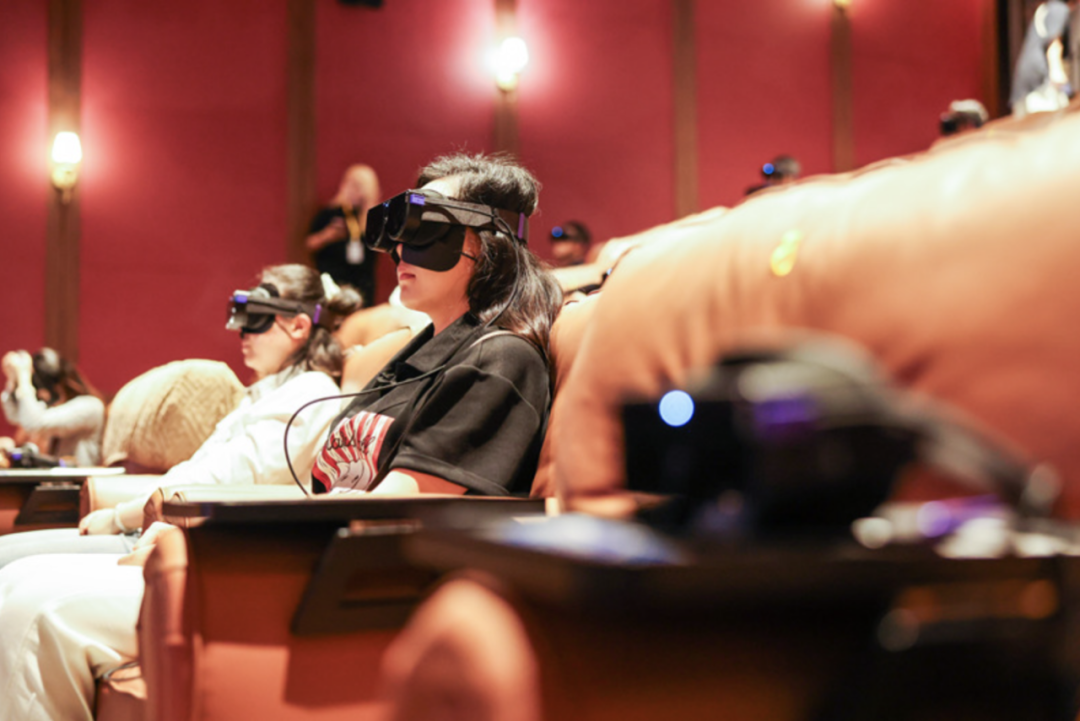
June 15 and June 16 saw the global or Asian premieres of a host of international XR works under the “SIFF Immersive” section of the 28th Shanghai International Film Festival (SIFF). During pre-screening guided talks, guest speakers offered audiences keys to unlocking these immersive pieces from diverse perspectives—spanning technical mechanisms and creative philosophies, historical context and viewing approaches—laying multi-layered groundwork for the immersive experiences to follow.
Co-produced by Denmark and the United States, Reality Looks Back turns its lens to the imperceptible quantum realm hidden behind everyday perceptions. Framed as a documentary, it continuously challenges viewers’ established understandings of reality. During the pre-film talk, Taozi, a 4DGS specialist from MediaStorm, opened the discussion on the Gaussian Splatting technology adopted by the production. Unlike conventional 3D modeling, Gaussian Splatting reconstructs real-world spaces via countless Gaussian ellipsoids, preserving real-life scenes with a fidelity far closer to photographic footage.
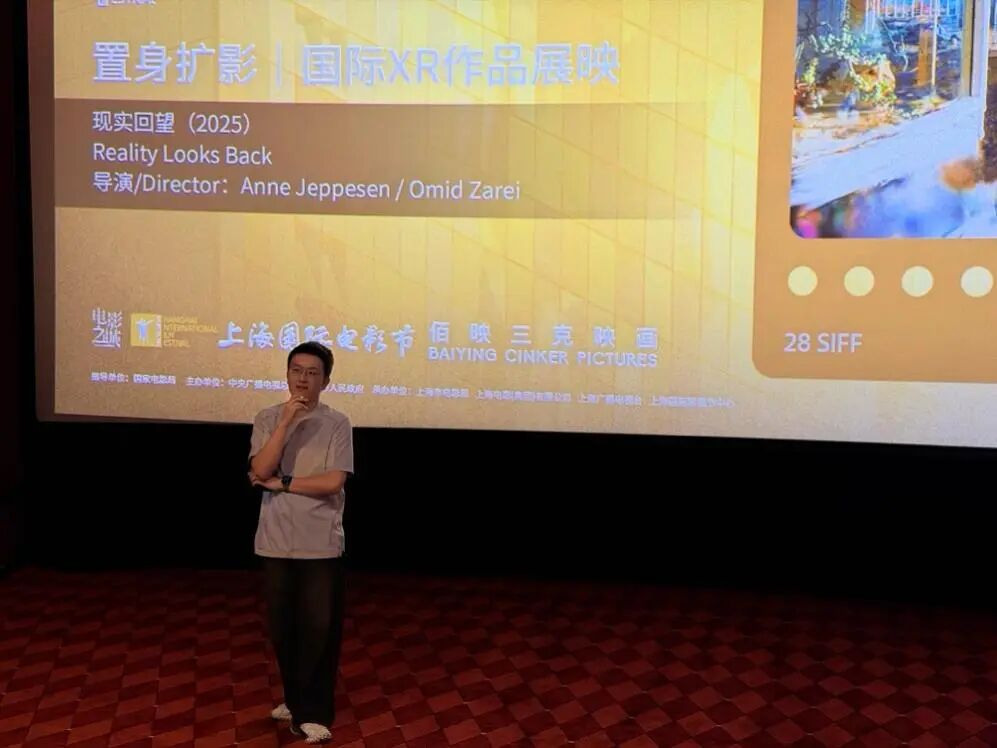
In Taozi’s view, the true intrigue of this technology lies beyond sheer photorealism. He specifically urged the audience to notice blurry ellipsoidal particles lining the edges of the frame—these visual artifacts, inherent technical byproducts, have been reimagined by the creators as a form of artistic expression in Reality Looks Back. As the film explores the quantum premise that “the observer shapes reality”, these liminal visuals, hovering between sharpness and blur, serve as a natural extension of the work’s central theme. This invites audiences to adopt a fresh viewing mindset: technology is not merely a production tool, but an active contributor to a work’s thematic meaning.
Canadian production The Umbra Mission documents a real expedition undertaken by a collective of artists, scientists, and visual creators, who sent a 360-degree camera to the edge of the stratosphere. It also marks the first time a hybrid documentary-VR piece has been screened in Chinese cinemas.
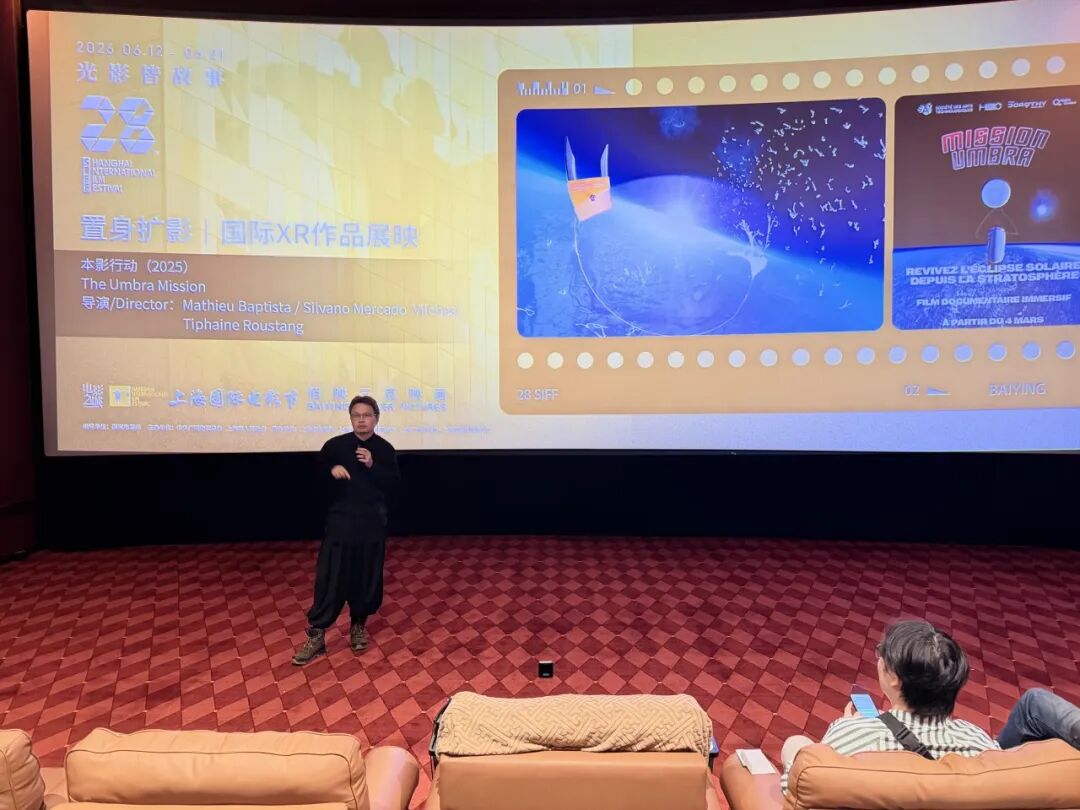
Before the screening, Peter Cat, founder of Deep Focus, recounted his two firsthand experiences witnessing total solar eclipses. “Broad daylight abruptly turns pitch black, and your body reacts instinctively,” he recalled. For most people, a total solar eclipse may remain merely an astronomical concept on paper, yet standing within its path unleashes a cosmic awe that strikes straight at your senses and emotions. For this reason, he urged the audience to pay close attention to the VR segment in the latter half of the film. As the camera reaches the stratosphere’s edge around 34,000 meters above sea level, viewers watch the Moon’s shadow sweep across Earth’s surface at staggering speed.
He closed by explaining that the Moon’s umbra traces an extremely narrow band across the planet—usually only tens to hundreds of kilometers wide—meaning any single location on Earth will wait an average of 400 years to see another total solar eclipse. This once-in-400-year celestial wonder has been translated for the first time into a spatially immersive experience felt bodily, inviting audiences to rethink humanity’s place within the cosmos.
The world premiere of the immersive concert film Jason Zhang Future • Live -Leave for 1982 World Tour - Bird’s Nest Immersive Concert took place during the event. Wu Shenbao, the production’s supervising producer, shared that Jason Zhang previously headlined 16 consecutive sold-out concerts at the National Stadium (Bird’s Nest), setting a new performance record. Far from a straightforward live recording, this immersive production reconstructs the concert experience through volumetric video and spatial audio technology.
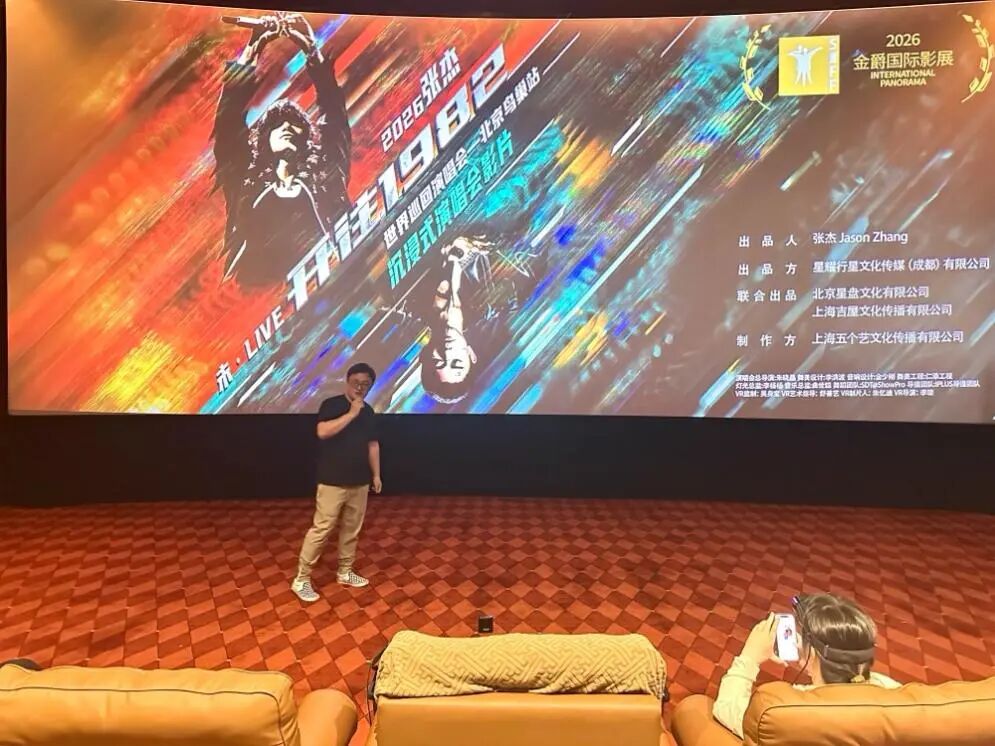
“We want audiences to truly stand center stage,” Wu Shenbao stated. Within the XR space, viewers are no longer confined to distant fixed seats; instead, they can stand beside the vocalist and absorb the electrifying live rush of lighting, stage design, and tens of thousands of fans singing along, rendered in dual-eye 4K resolution. Moments once locked to a specific time and venue are transformed into repeatable immersive journeys worth revisiting. For audiences, this is far more than a concert replay; instead, it is a new way to step back into the live spectacle.
This year’s “SIFF Immersive” section hosted the Asian premieres of three series installments: Crafting Crimes: The Lizzie Borden House, Crafted Crimes: The Wonderland Murders and Crafted Crimes: The Mona Lisa Heist. Marking the first XR episodic series presented in China, these works unveil fresh narrative possibilities enabled by mixed reality.
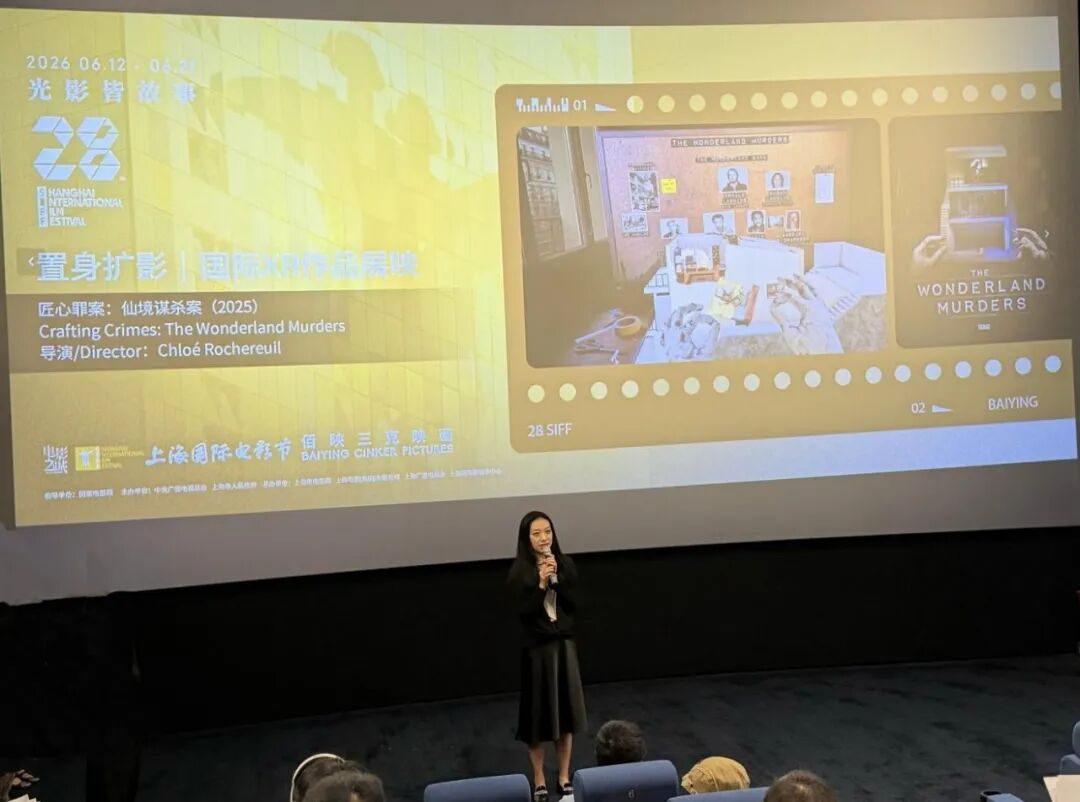
During the pre-screening guided talk, Che Lin, curator of the “SIFF Immersive” section, began by clarifying the distinctions between MR and VR. Unlike VR, which fully transports users into a purely virtual realm, MR enables physical surroundings and digital content to coexist simultaneously. Audiences can both see fellow participants around them and interact with digitally rendered architectural models, case evidence, clues, and historical environments laid out before their eyes.
She drew special attention to space as a core narrative device. In Crafting Crimes: The Lizzie Borden House, the layout and spatial connections of the residence function as far more than just the crime’s backdrop—they mirror the tangled web of conflicting interests among the characters. Furthermore, modern viewers can examine the rigid gender stereotypes imposed on women a century ago through a contemporary lens, reaching interpretations vastly different from those held by investigators back then.
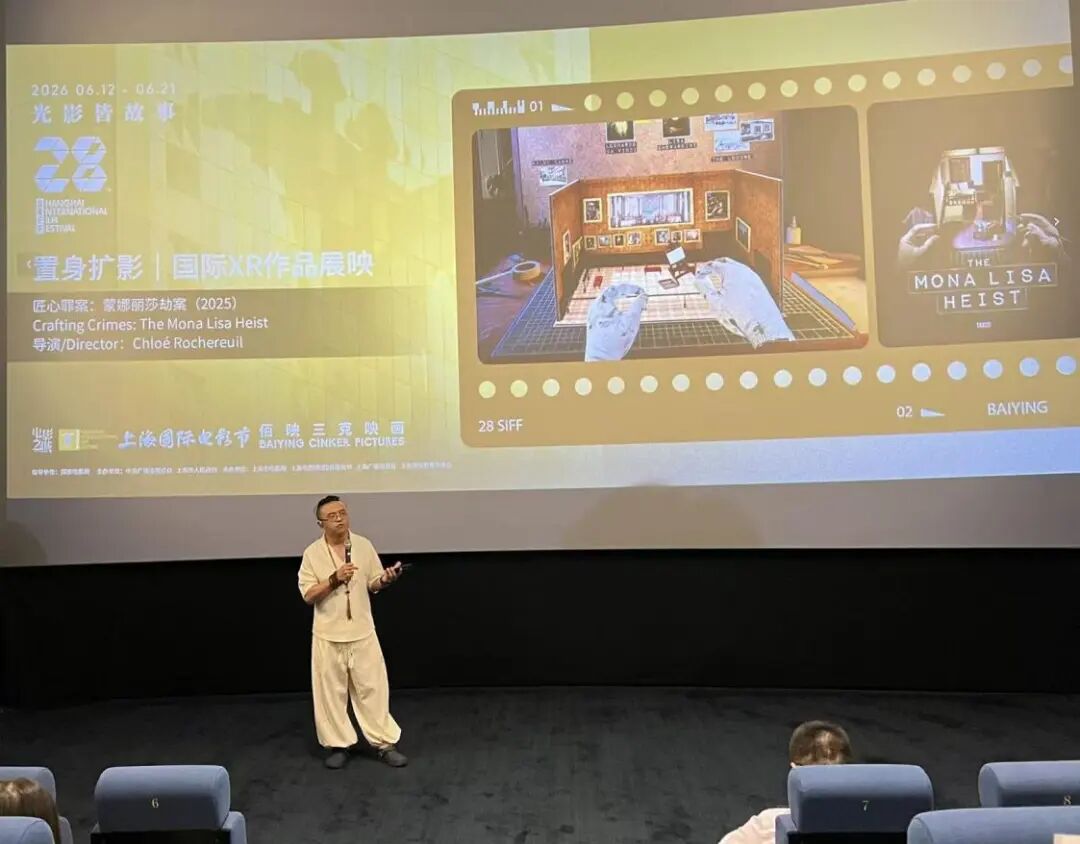
For the guided session of Crafted Crimes: The Mona Lisa Heist, veteran tech creator Miao vividly recounted the sensational 1911 theft of the iconic painting that shocked the entire globe. He stressed that the greatest allure of an MR experience, setting it apart from feature films and documentaries, lies in its sense of participation. “Films guide you strictly through the director’s lens; documentaries deliver ready-made conclusions narrated by others. Here, however, you must hunt for clues, arrange exhibits and reconstruct the crime scene with your own hands.” Through this active engagement, history ceases to be a passive recounted past and transforms into an immersive experience that audiences can step into and reinterpret for themselves.
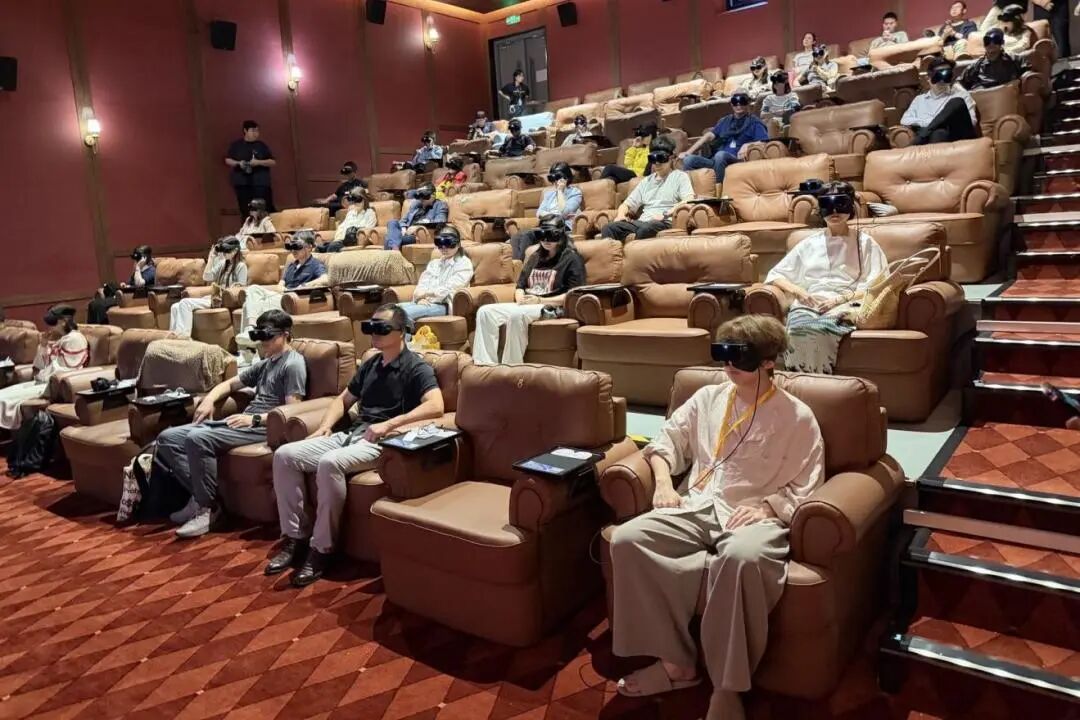
From quantum reality to cosmic spectacles, from pop concert live scenes to historical events dating back a century ago, the lineup of the “SIFF Immersive” section continuously pushes the creative boundaries of XR imagery. Adopting the traditional cinema model with centralized audio control and collective group viewing, it delivers a new market prototype for seated virtual reality film experiences.


 Shanghai Municipal Administration of Culture and Tourism