Five Animated Storytelling Worlds of Memory and Wonder Compete for Golden Goblet
Five animated films – Amadeo and the Hypothetical World, Garuda: Dare to Dream, Dante, Lucy Lost and Winnipeg, Seeds of Hope – have been shortlisted for the Golden Goblet Award in the Animation section at the 28th Shanghai International Film Festival.
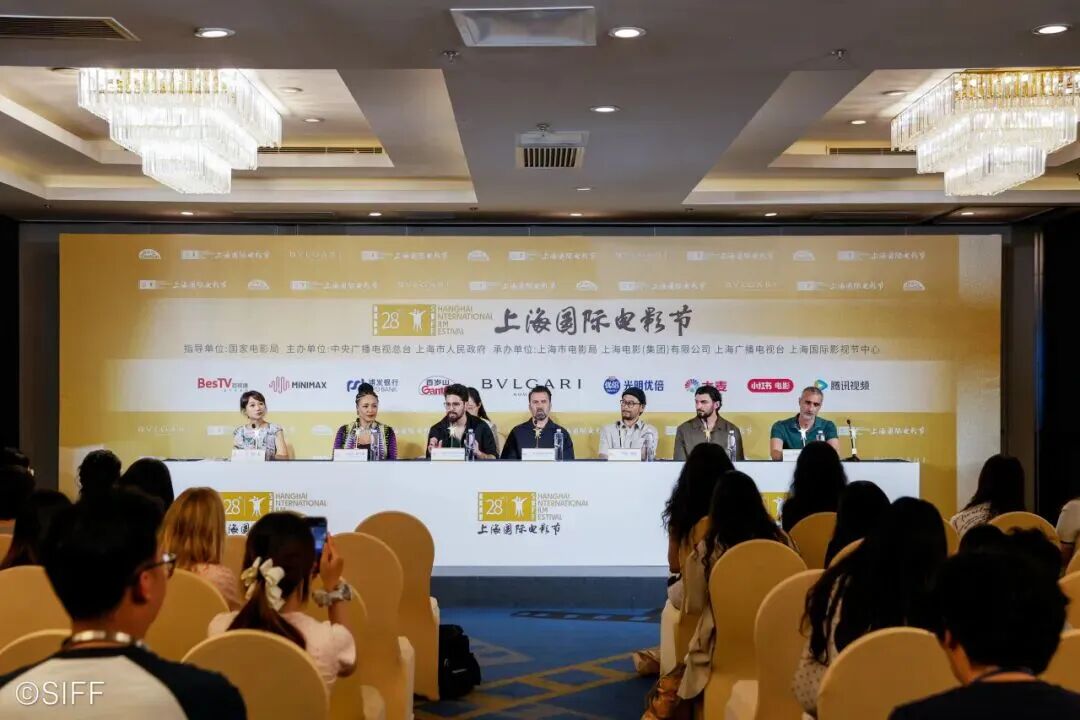
Spanning the traumas of historical memory, the imagination of wondrous adventures, and the complexities of childhood, the five films employ rich and nuanced storytelling to portray humanity’s enduring quest for identity, dreams, and hope.
The production teams behind these films attended a press meeting on June 19, where they shared their creative concepts and processes with the audience.
Brenda Ligia, director of Amadeo and the Hypothetical World, said that animation is an excellent medium that allows her to break through the limitations of props and space via visual language, and fully express her imagination and creativity.
Leveraging this distinctive characteristic of animation, she portrayed an enslaved African boy in the film who invents the camera before Europeans. While using images to help his fellow Black people fight for freedom, he also enters into a cross-class romantic relationship with a noblewoman.
"Our film is set in Brazil, a land brimming with magic and dreams," Ligia remarked. "There, the protagonist Amadeo uses his camera to reveal a new world and fulfill his own American dream."
Co-director Everton Jose Cunha Amorim further explained that the film incorporates not only Latin American fantasy elements but also authentic cultural aspects of the Americas. These were researched through consultations with historians and visits to museums.
The Indonesian film Garuda: Dare to Dream tells another equally inspiring story of a boy with asthma who dreams of joining the national football team. After an unexpected encounter with a spirit, he develops exceptional football skills and ultimately achieves a remarkable turnaround in his life.
According to director Ronny Gani, integrating the Garuda spirit from Indonesian mythology into a story about a teenager pursuing his football dream was a brilliant touch in his plot design.
"In our mythology, Garuda represents the national spirit, which teaches people how to surpass the self of yesterday and become even better tomorrow."
Since the film's audience will largely consist of children, he employed this direct and accessible approach to convey this spirit to them.
Dante, a film co-produced by Sweden, Norway, and Denmark, follows a bank employee who is forced to flee to a landfill after being falsely accused of theft. There he meets a clever mouse, and embarks on an adventure to uncover the true culprit.
Adapted from the eponymous children's book by Frida Nilsson, winner of the Astrid Lindgren Memorial Award, it presents an adult fairy tale that blends humor with philosophical depth.
Photographer Gabriel Mkrttchian attended the event on behalf of director Linda Hambäck, explaining the film's distinctive visual features from his perspective.
"The two main characters in the film – the bank employee and the mouse – have vastly different physical features, so when designing the scenes, we meticulously refined both the lighting and camera movements," Mkrttchian said.
Directed by French filmmaker Olivier Clert, Lucy Lost is adapted from the original work of renowned British children's literature author Michael Morpurgo.
Centered on Lucy, a child with extraordinary talent who is ostracized by those around her, the film depicts her suffering from rumors and superstitious prejudice. After meeting a mysterious girl, she sets out to uncover her true origins.
"This is a story with a gentle aesthetic that explores a girl's self-acceptance and courageous growth," Clert explained. "That's why I chose 2D visuals to present it in the simplest, most unadorned way possible."
In addition, she chose hand-drawn animation as the visual medium to lead audiences through both the external real world and the protagonist’s inner world. She said this approach prevented the portrayal of reality’s harshness from overwhelming viewers.
Winnipeg, Seeds of Hope is set in Spain in the period after the Spanish Civil War, when nearly 500,000 people fled to France for fear of retaliation. It follows the young protagonist and her father who escape from Barcelona and board the “Winnipeg,” a ship chartered by Pablo Neruda.
Animating a true yet little-known event from 1939, the film meticulously reconstructs historical settings without being constrained by the limitations of actual filming locations.
"What we aim to convey is a sense of human warmth," director Benat Beitia said. "When one group faces difficulties, compatriots around the world extend a helping hand."
In the film, the ship “Winnipeg” serves as a beacon of hope: it rescues refugees from the dark future awaiting them in Europe and carries them to a new continent, where they can seek a fresh start.


 Shanghai Municipal Administration of Culture and Tourism