Cultural Memory, Family Rifts and Childhood Resilience Shape SIFF Short Film Contenders
The directors of movies nominated for the Short Film section of the 28th Shanghai International Film Festival's Golden Goblet Awards spoke to the press about their works on June 19.
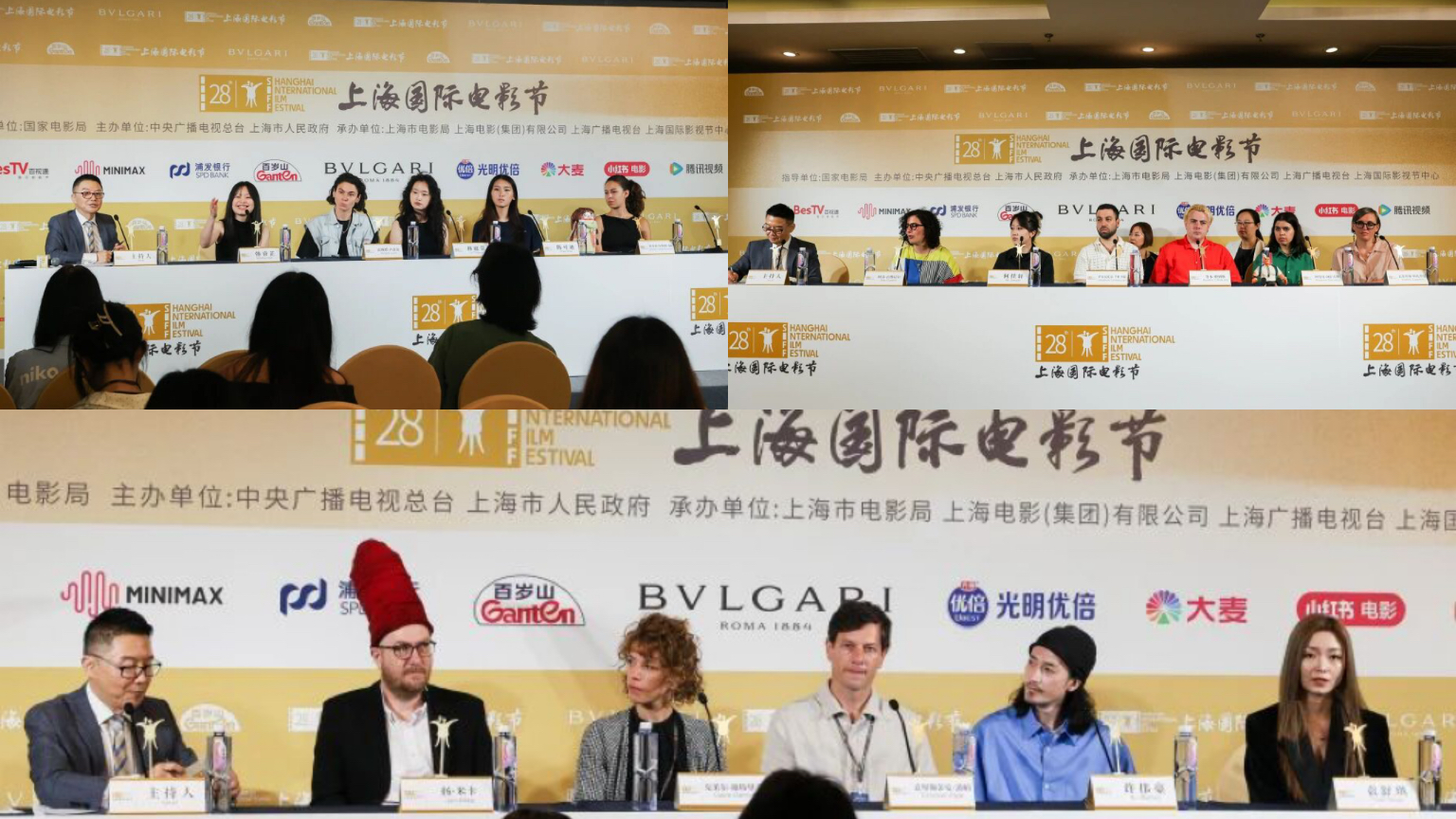
Renata Lučić, a Croatian director, explained why she chose to set the timeline of her film 2000 during the transition period between 1999 and 2000.
"In Croatia, due to the lingering trauma of the war at that time, everyone paid close attention to the arrival of 2000," Lučić said. "Opinions varied significantly: some believed the new year would bring positive changes, while others thought the end of the world was approaching."
Using multimedia content including radio broadcasts and television footage, the film captures the complex emotions people experience when welcoming the new year, as well as the subsequent fragmentation and reconfiguration of interpersonal relationships that arise from these emotions.
The Romanian entry The Drought also explores interpersonal dynamics, but uniquely focuses on the estrangement and reconciliation between a father and his son.
Director Cristian Popa revealed that the term "drought" in the title carries a double meaning: it refers not only to weather and climate, but also acts as a metaphor for the father-son relationship.
“Just as a rainless climate leaves a village parched, familial bonds devoid of emotional warmth will ultimately wither away,” he observed.
In the finale, the protagonist carries his father into a cornfield, fulfilling his dying wish for one final rain, symbolizing a form of atonement that bridges the years’ long rift between them.
Lazare, directed by French filmmaker Claire Dietrich, tells the story of a child with a disability who confronts an unforeseen crisis entirely without adult intervention.
Noting the film market lacks works that truly highlight children's capabilities, Dietrich said she wanted to convey the spirit of children overcoming fear and yearning for freedom.
"I am a mother myself, and I have witnessed firsthand how my daughter has grown and gradually become independent," she shared.
“A film featuring children doesn’t have to be made exclusively for children. I hope parents will also draw inspiration from it and recognize the importance of granting children greater freedom as they grow up.”
Beyond these live action pieces, the shortlisted animated short films for this festival also left a strong impression on the audience.
In her film Water's Time Slice, Chinese director He Jiaxuan portrays a microscopic world of algae micro-organisms.
Using glass for stop-motion animation filming, it depicts the birth, predation, reproduction, and death of micro-organisms inside a single falling drop of water.
"Many scenes in this film feel remarkably unusual, transporting viewers into an unknown, extraordinary world," she said. "But as the camera pulls back, you realize it is just a single drop of water, an ordinary object found everywhere."
Adapted from Boris Pachor's short story, the film Julka recounts the story of an eight-year-old girl who faces severe punishment from her teacher for speaking Slovenian in class.
Under the influence of the fascist government's ban on using indigenous and minority languages, she endured years of persecution and authoritarian rule.
To better align with the story's narrative style, director Valeria Cozzarini employed rotoscoping, a technique that converts live-action footage into animated forms.
"Animation knows no limits in imagination and expression," Cozzarini said, "but starting with real stories and visuals makes a film feel more natural and grounded."


 Shanghai Municipal Administration of Culture and Tourism